


Spiritualism As An Escape From Prison
- Jodie Roy
- Dec 15, 2025
- 3 min read
Updated: Dec 17, 2025
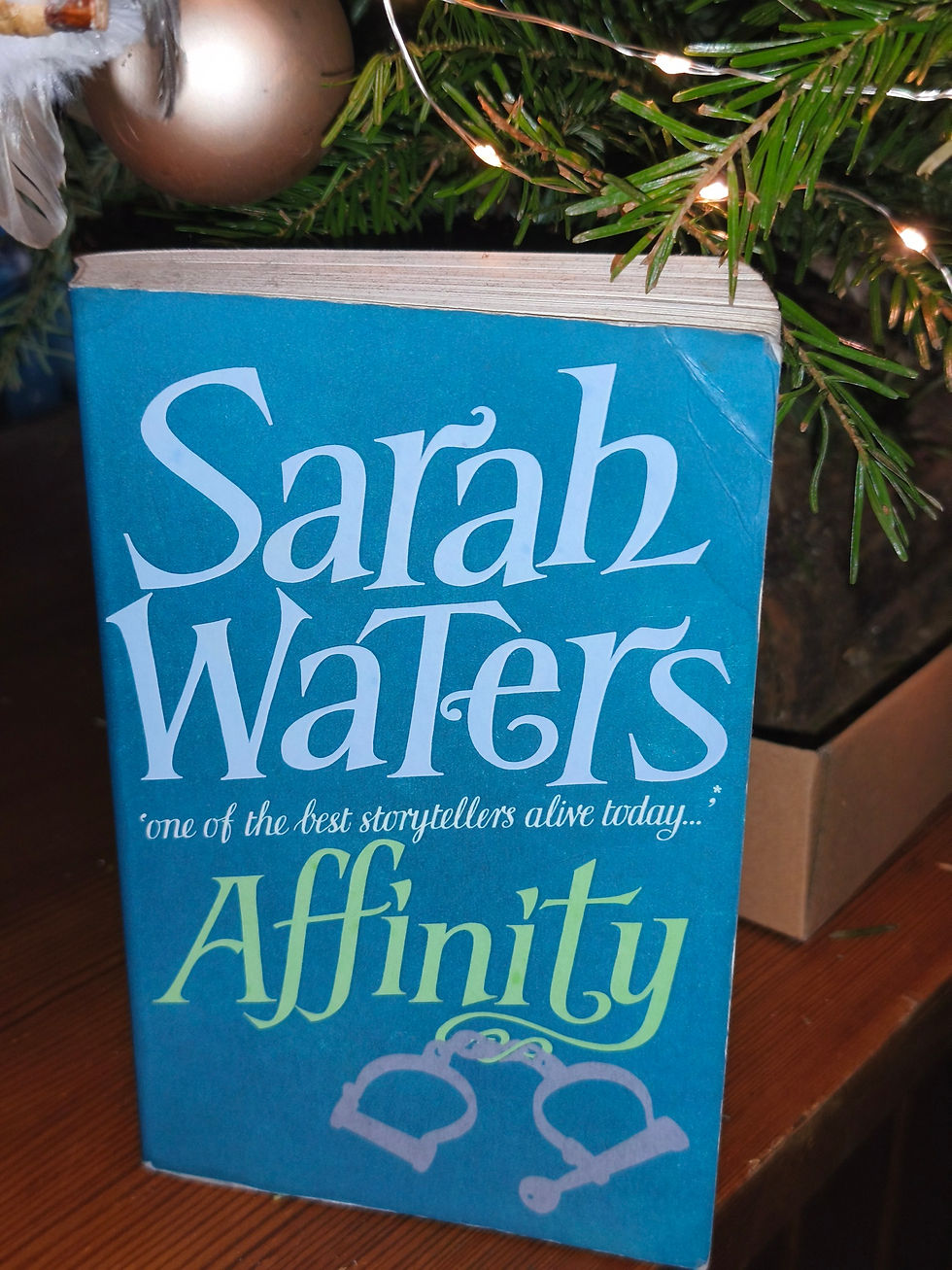
You know that expression, “If I died yesterday, I wouldn’t have known…”? Well, in my case, that could be said about two things after reading Sarah Waters’s novel Affinity. First, I never imagined I would be reading a novel that deals with spiritualism in any way. Second, I literally had no idea that spiritualism was such a big thing in Victorian society. However, as I am currently reading another novel, Arthur & George, which also deals with it to a lesser extent, I am learning more about it.
Not Just About Spirtualism
So here we are. But to be honest, Affinity is much more than a novel about spiritualism or spiritism, however one might want to call it—it covers a variety of themes, primarily focusing on the experiences and lives of women in nineteenth-century England.
Prisoners of Different Prisons
This is an epistolary novel, consisting of diary entries by two women, both prisoners but belonging to very different worlds—Margaret Prior and Selina Dawes—with priority given to Margaret’s perspective.
Margaret Prior is not like most other middle-class women of this period. She is independent, strong, intelligent, well-read, and defies all the rules and regulations of her time. She had a deep bond with her father, who, as we learn at the beginning, recently passed away. Her father also seemed to be the person who knew about Margaret’s secret love, which would under no circumstances have been tolerated in nineteenth-century England. Even though I once heard that while male homosexuality was penalized, Queen Victoria was adamant that lesbians did not exist, I do not know whether this was true or not. What is certain is that women such as Margaret could not live their lesbian relationships freely.
As part of her recovery after a suicide attempt following the death of her father, Margaret decides to start visiting women serving sentences at Millbank Prison. A strange idea, if someone asked me, but it seems that at the time, from the perspective of Mr. Shillitoe—her father’s friend and a prison warden—it was better for her to focus on women who had “brought ruin upon their lives” rather than on all the things absent from her own. During her visits, Margaret forms connections with various women there, but one in particular attracts her attention.
Selina Dawes, a spirit medium sentenced for fraud after a séance went badly, has many issues—though this is not clear from the start. At first, Selina appears to be a sweet and gentle young woman who was wrongfully accused, and as such, she finds her way into Margaret’s life and, more importantly, her heart.
Spiritualism , Manipulation and Power Relations
What struck me most about this novel is how Waters uses spiritualism to show how desperate Margaret feels to escape the prison she has been placed in simply for being a woman born into a middle-class family in nineteenth-century England. Despite her mother’s wishes, Margaret is anything but a delicate and demure Angel of the Home. She is brilliant, educated, and yearns for the freedom to be herself and to love whom she wants to love. That said, Selina’s stories of spirits and other worlds sound like gibberish at first. But after a while, Margaret chooses to believe a sister in imprisonment when Selina tells her that she can break free from her prison thanks to her “friends” from the spirit world. Desperately searching for another life, Margaret is increasingly drawn to Selina and slowly starts to fall in love with her. But Selina is nothing like a sweet woman punished for trying to help others. As the story unfolds, we see how she uses her uncanny knowledge and skills to manipulate Margaret and weave her way into her world with plans utterly different from Margaret’s.
Reflections
This isn’t the best book I have read this year, but it is definitely a very interesting—and, I would say, useful—one. On the one hand, it is a story of societal cruelty against women regardless of class or wealth. On the other, it shows how cruel women can become toward one another in order to survive in that world. Have you read Affinity or any other novels by Sarah Waters? What are your impressions? I would also love to get some recommendations from you.


Comments